Introduction
Adopting a rescued Rabbit can be a rewarding experience. Many rabbits in shelters come from difficult backgrounds, including neglect, poor nutrition, or improper housing. Because of these conditions, rescued rabbits may face several health challenges when they arrive at their new homes.
Understanding the common health issues that affect rescued rabbits is essential for providing proper care. With the right knowledge, good nutrition, and regular veterinary checkups, many of these problems can be prevented or managed effectively.
In this article, we will explore the most common health issues rescued rabbits face and provide practical tips to help keep them healthy.
Why Rescued Rabbits May Have Health Problems
Rescued rabbits often come from environments where they did not receive proper care. Some may have been kept in small cages, fed poor diets, or lacked medical attention.
Common reasons rescued rabbits experience health problems include:
- Poor diet before rescue
- Lack of veterinary care
- Stress from environmental changes
- Poor hygiene and living conditions
- Exposure to parasites or infections
Because rabbits are sensitive animals, even small problems can quickly become serious if not addressed.
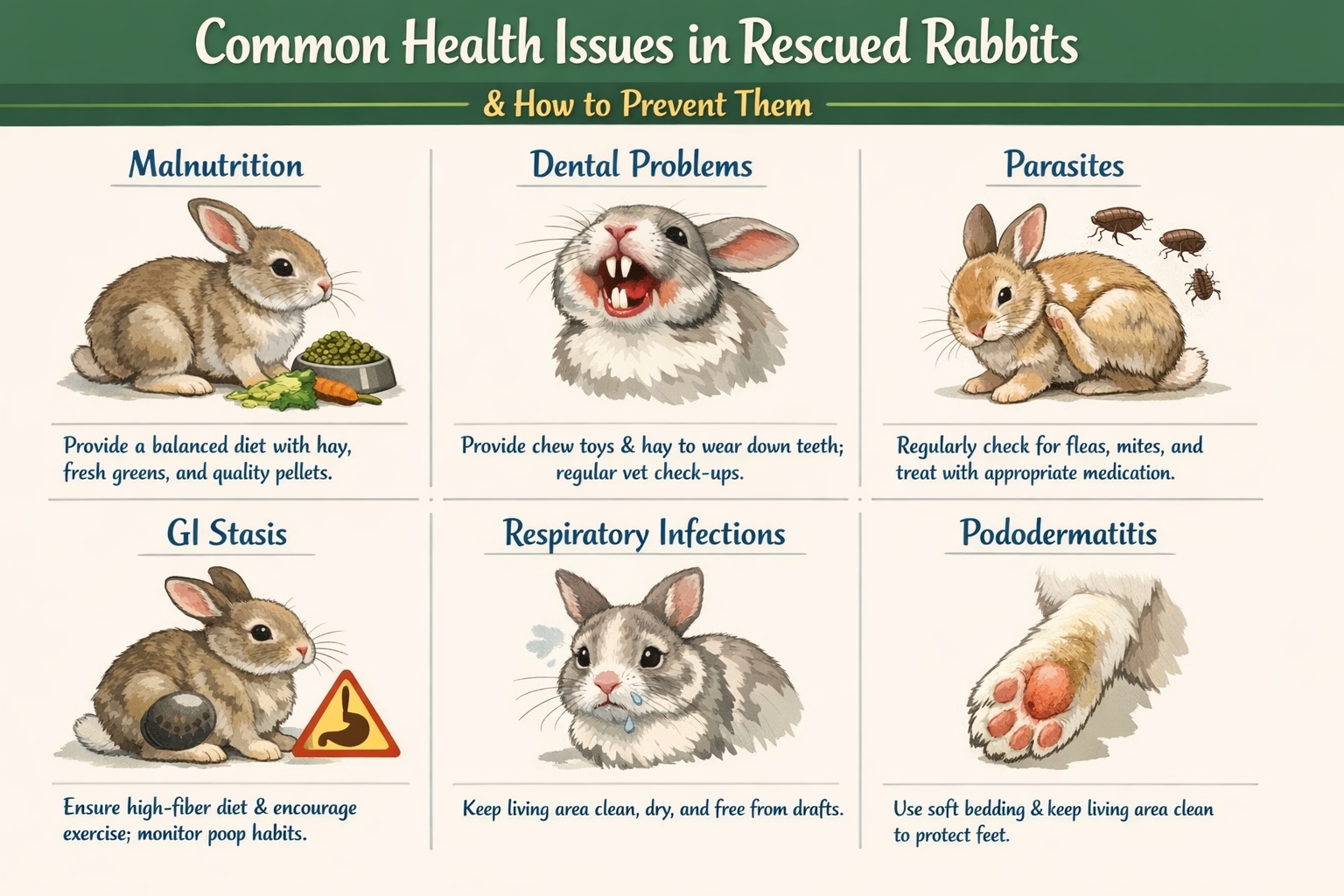
1. Dental Problems
Dental issues are one of the most common health problems in rabbits.
Rabbit teeth grow continuously throughout their lives. If the teeth do not wear down properly, they can become overgrown and cause pain or difficulty eating.
Symptoms
- Drooling
- Difficulty chewing
- Weight loss
- Reduced appetite
Prevention
- Provide unlimited hay, which naturally wears down teeth
- Offer safe chew toys
- Schedule regular veterinary checkups
A proper diet is the most effective way to prevent dental problems.
2. Gastrointestinal Stasis
Gastrointestinal stasis is a serious digestive condition that occurs when a rabbit’s digestive system slows down or stops working.
It is one of the most dangerous health issues for rabbits.
Symptoms
- Loss of appetite
- Small or absent droppings
- Lethargy
- Bloating
Prevention
- Feed a high-fiber diet rich in hay
- Ensure constant access to fresh water
- Encourage regular exercise
- Reduce stress
Early treatment is critical, so any signs of digestive problems should be addressed immediately.
3. Parasites
Rescued rabbits may carry parasites due to poor living conditions before adoption.
Common parasites include:
- Fleas
- Mites
- Intestinal worms
Symptoms
- Scratching or itching
- Hair loss
- Skin irritation
- Poor coat condition
Prevention
- Regular veterinary checkups
- Clean living areas
- Proper grooming
- Preventative parasite treatments recommended by a vet
Maintaining good hygiene greatly reduces the risk of parasite infestations.
4. Respiratory Infections
Respiratory infections are another common health issue in rabbits.
These infections are often caused by bacteria such as Pasteurella multocida.
Symptoms
- Sneezing
- Runny nose
- Watery eyes
- Difficulty breathing
Prevention
- Keep the rabbit’s living area clean
- Ensure proper ventilation
- Avoid dusty bedding materials
- Seek veterinary care if symptoms appear
Early treatment can prevent respiratory infections from becoming severe.
5. Obesity
Some rescued rabbits become overweight due to poor diet or lack of exercise.
Obesity can lead to several health problems, including joint issues and digestive disorders.
Symptoms
- Difficulty moving
- Excess body fat
- Reduced activity levels
Prevention
- Provide a balanced diet
- Limit high-sugar treats
- Encourage daily exercise
- Offer plenty of space to move
Healthy rabbits should have access to space where they can hop and explore.
6. Ear Infections
Ear infections can occur in rabbits, especially those kept in unclean environments.
Some breeds with drooping ears may be more prone to these issues.
Symptoms
- Head shaking
- Scratching ears
- Ear discharge
- Loss of balance
Prevention
- Keep living areas clean
- Check ears regularly
- Seek veterinary care if unusual symptoms appear
Proper hygiene helps prevent many ear problems.
7. Stress-Related Health Problems
Rescued rabbits often experience stress when adjusting to new environments.
Stress can weaken the immune system and lead to other health problems.
Signs of Stress
- Hiding frequently
- Loss of appetite
- Thumping hind legs
- Aggressive behavior
Prevention
- Provide a calm and quiet environment
- Introduce new experiences gradually
- Maintain a consistent routine
Reducing stress helps rabbits adapt more easily to their new homes.
Importance of Regular Veterinary Care
Routine veterinary care is essential for keeping rescued rabbits healthy.
A veterinarian experienced with rabbits can:
- Detect early signs of illness
- Provide vaccinations where necessary
- Offer dietary advice
- Treat parasites and infections
Regular checkups help prevent small issues from becoming serious health problems.
Creating a Healthy Environment for Rabbits
A healthy environment is one of the best ways to prevent illness in rabbits.
Important factors include:
- Clean living space
- Fresh water at all times
- Proper ventilation
- Safe bedding materials
- Adequate exercise space
A well-maintained environment promotes both physical and mental health.
Proper Diet for Healthy Rabbits
Diet plays a major role in preventing health problems.
A healthy rabbit diet should include:
Hay
Hay should make up the majority of a rabbit’s diet because it supports digestion and dental health.
Fresh Vegetables
Leafy greens provide essential nutrients.
Pellets
Pellets should be given in limited amounts as a supplement.
Fresh Water
Clean water should always be available.
Avoid sugary treats and processed foods.
Conclusion
Rescued rabbits may face several health challenges due to their past living conditions. Common issues include dental problems, digestive disorders, parasites, respiratory infections, obesity, and stress-related illnesses.
Fortunately, many of these health problems can be prevented through proper nutrition, clean living conditions, regular veterinary care, and a calm environment.
By understanding the needs of rescued rabbits and providing consistent care, owners can help these gentle animals live long, healthy, and happy lives in their new homes.