Introduction
Monkeys are intelligent and social animals that live in forests, mountains, and tropical regions around the world. They play an important role in ecosystems by spreading seeds and maintaining the balance of forest environments. However, many monkeys face serious threats caused by human activities and environmental changes.
Because of these threats, wildlife rescue teams and conservation organizations often need to intervene to save injured, orphaned, or endangered monkeys. Members of the broader primate group Monkey are frequently rescued and placed in rehabilitation centers where they can recover and, if possible, return to the wild.
This article explains the major threats that lead to monkey rescues and why conservation efforts are necessary.
1. Habitat Destruction
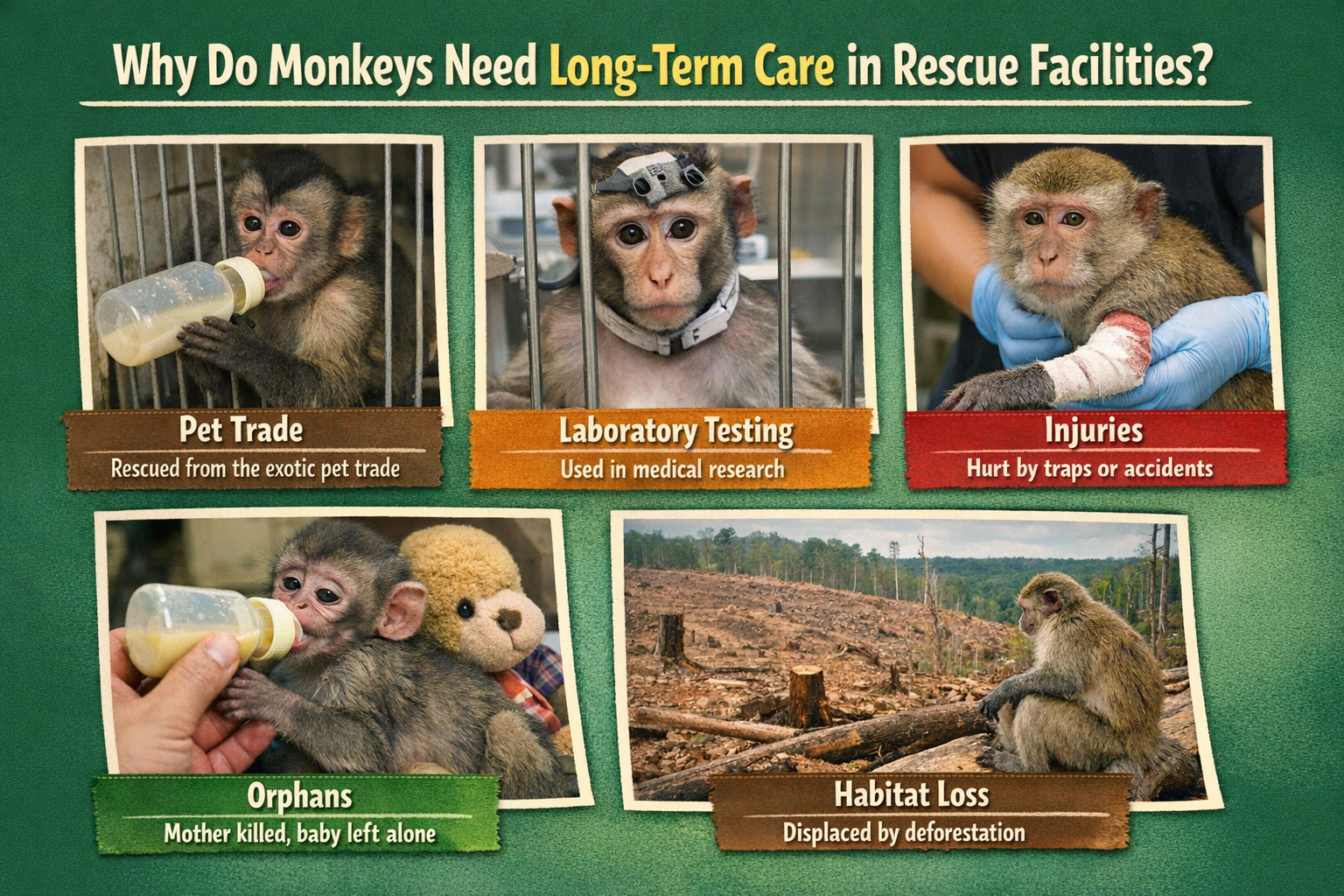
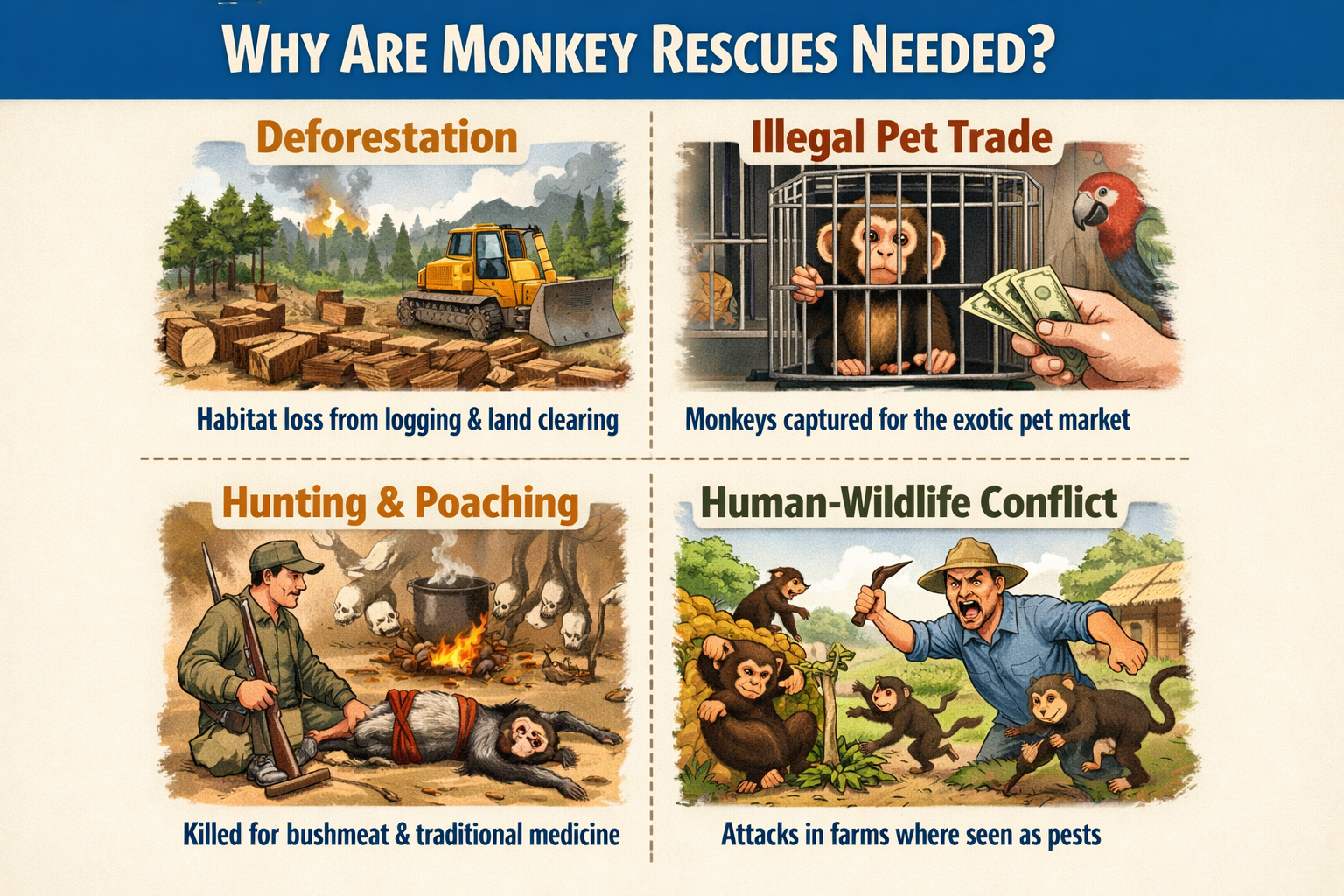
One of the biggest reasons monkeys need rescue is the destruction of their natural habitats.
Causes of Habitat Loss
Forests are cleared for many reasons, including:
- Agriculture and farming
- Logging and timber harvesting
- Road construction
- Urban expansion
- Mining operations
Important ecosystems such as the Amazon Rainforest and Congo Basin are rapidly shrinking due to deforestation.
Impact on Monkeys
When forests disappear, monkeys lose:
- Food sources
- Shelter
- Safe nesting areas
- Social group structures
Many monkeys are forced into human settlements in search of food, which increases the risk of injury or capture.
2. Illegal Wildlife Trade
The illegal wildlife trade is another major threat that often leads to monkey rescues.
Many monkeys are captured and sold as exotic pets or used in entertainment industries.
Species such as the Capuchin Monkey and Marmoset are commonly targeted by wildlife traffickers.
Problems During Trafficking
Captured monkeys often suffer from:
- Stress and dehydration
- Physical injuries
- Malnutrition
- High mortality during transport
Rescue organizations frequently confiscate these animals and place them in sanctuaries for recovery.
Groups like the World Wildlife Fund and International Union for Conservation of Nature work to combat wildlife trafficking and protect endangered species.
3. Hunting and Bushmeat Trade
In some regions, monkeys are hunted for food, a practice known as the bushmeat trade.
Hunters often kill adult monkeys, leaving infants orphaned and unable to survive on their own.
These orphaned animals are commonly rescued and raised in rehabilitation centers.
Hunting also reduces wild populations and threatens the survival of many primate species.
4. Human–Wildlife Conflict
As human populations grow, conflicts between people and wildlife increase.
Monkeys may enter farms and villages in search of food, especially when their natural habitats are destroyed.
Common Conflicts
Farmers may consider monkeys pests because they:
- Eat crops
- Damage plants
- Enter homes or storage areas
As a result, monkeys may be trapped, injured, or killed. Rescue teams often intervene to relocate these animals to safer environments.
5. Pet Ownership and Abandonment
Many monkeys are kept as exotic pets when they are young because they appear cute and manageable.
However, monkeys grow into strong and complex animals that require specialized care.
Species such as the Rhesus Macaque are often kept illegally as pets in some parts of the world.
Problems With Pet Monkeys
Owners often abandon or surrender monkeys because they:
- Become aggressive
- Require expensive care
- Need large living spaces
- Develop behavioral problems
Rescue centers then provide rehabilitation and long-term care.
6. Injuries From Traps and Accidents
Many monkeys are injured by traps set for other animals.
These traps can cause:
- Broken limbs
- Deep wounds
- Permanent disabilities
Wildlife rescue teams often treat injured monkeys and bring them to rehabilitation facilities where veterinarians provide medical care.
Some monkeys recover and return to the wild, while others require lifelong sanctuary care.
7. Disease and Poor Health
Rescued monkeys often suffer from diseases and health problems caused by poor living conditions.
Common issues include:
- Parasites
- Respiratory infections
- Malnutrition
- Stress-related illnesses
Veterinarians at rescue facilities treat these conditions and monitor the monkeys until they regain strength.
8. Climate Change
Climate change is an emerging threat to many wildlife species, including monkeys.
Changing weather patterns can affect:
- Food availability
- Forest ecosystems
- Water sources
Over time, these changes may force monkeys to migrate or compete for resources, increasing the likelihood of injury and rescue.
Importance of Monkey Rescue Programs
Monkey rescue programs play a critical role in protecting wildlife and supporting conservation.
These programs help by:
- Treating injured animals
- Rehabilitating orphaned monkeys
- Returning healthy individuals to the wild
- Educating communities about wildlife protection
Many rescue centers also conduct research that helps scientists understand primate behavior and conservation needs.
How People Can Help Prevent Monkey Rescues
Although rescues are important, preventing threats is even more critical.
People can help by:
Avoiding Exotic Pets
Monkeys should never be kept as household pets.
Supporting Conservation Groups
Donating to organizations that protect wildlife habitats helps reduce threats to monkeys.
Promoting Sustainable Products
Choosing products that do not contribute to deforestation protects monkey habitats.
Raising Awareness
Educating others about wildlife conservation helps reduce demand for illegal animal trade.
Conclusion
Monkey rescues are often necessary because of serious threats such as habitat destruction, illegal wildlife trade, hunting, human conflict, pet ownership, injuries, disease, and climate change.
These threats place immense pressure on monkey populations around the world. Rescue organizations and conservation programs work tirelessly to save injured and orphaned animals while protecting their natural habitats.
Through global awareness, stronger wildlife laws, and community support, it is possible to reduce these threats and ensure a safer future for monkeys in the wild.