Introduction
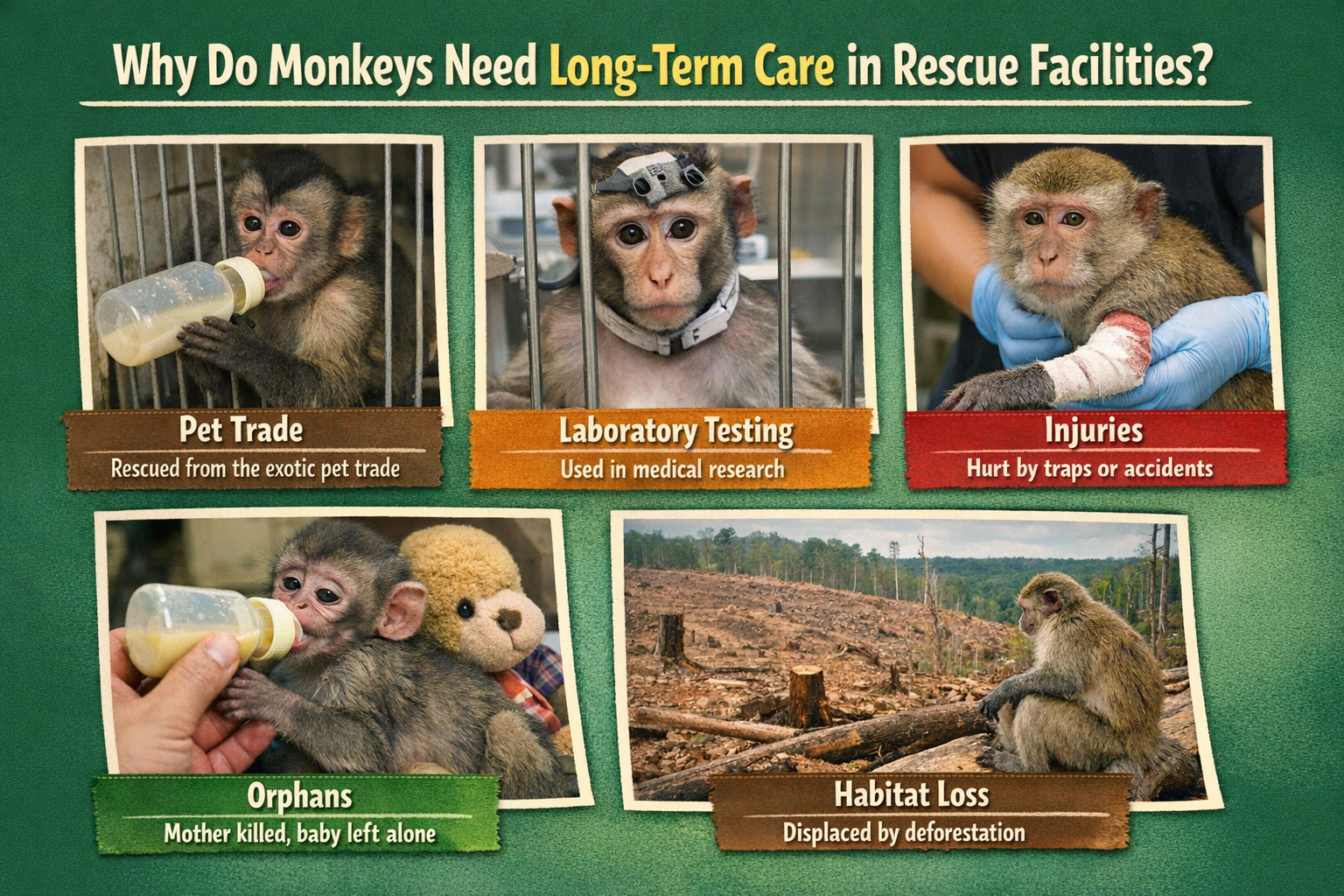
Monkeys are intelligent, social animals that require complex environments and strong family groups to survive and thrive. Unfortunately, many monkeys around the world are rescued from harmful situations such as illegal pet ownership, wildlife trafficking, habitat destruction, or scientific exploitation. After being rescued, some monkeys cannot safely return to the wild and must live in rescue centers for the rest of their lives.
Species from the broader primate group Monkey often need specialized care due to their intelligence, emotional sensitivity, and social needs. Long-term rescue facilities provide a safe environment where these animals can recover, receive medical treatment, and live with others of their species.
This article explains the main reasons why some monkeys require lifelong or long-term care in rescue facilities.
1. Injuries and Physical Disabilities
Many rescued monkeys arrive at sanctuaries with serious injuries.
Common Causes of Injuries
Monkeys may be harmed due to:
- Illegal wildlife trafficking
- Hunting traps and snares
- Abuse by pet owners
- Accidents during capture or transport
For example, species like the Capuchin Monkey are often captured for the exotic pet trade and may suffer broken bones, missing limbs, or permanent nerve damage.
Why They Need Long-Term Care
If a monkey cannot climb trees, forage properly, or escape predators, it cannot survive in the wild. Rescue centers provide medical care, rehabilitation, and a protected habitat where injured monkeys can live safely.
2. Orphaned Baby Monkeys
Many monkeys in rescue centers are young animals that have lost their mothers.
How They Become Orphans
Baby monkeys often become orphaned when:
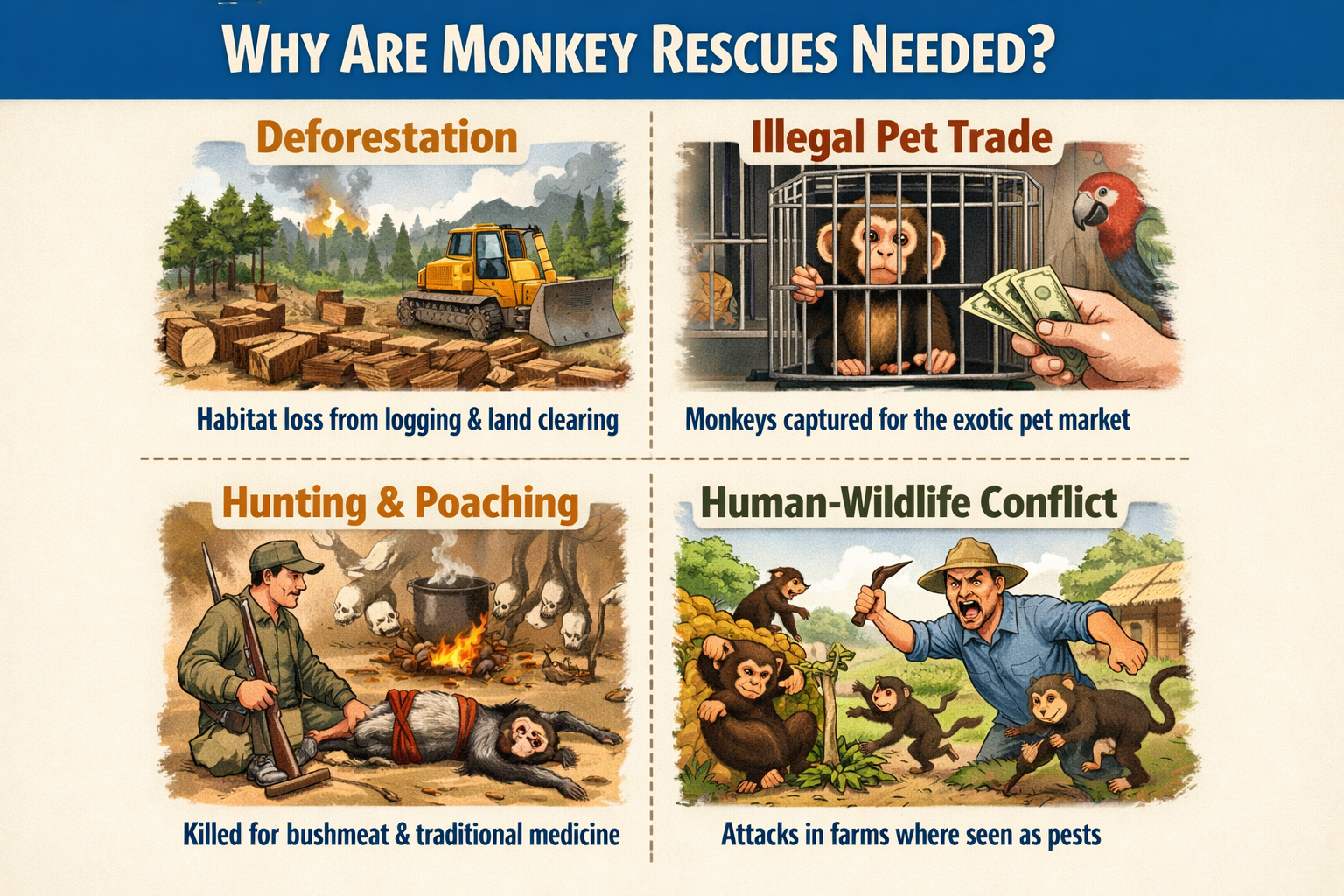
- Hunters kill the mother for bushmeat
- Adults are captured for illegal trade
- Habitat destruction separates families
Infants such as the Spider Monkey depend heavily on their mothers for survival during the first years of life.
Long-Term Impact
Without proper social learning from their mothers and troop members, orphaned monkeys may not learn important survival skills like:
- Finding food
- Avoiding predators
- Communicating with their group
Because of this, some orphaned monkeys cannot be safely released back into the wild.
3. Psychological Trauma
Monkeys are highly intelligent and emotional animals. When they experience abuse or isolation, they can develop long-lasting psychological problems.
Signs of Trauma
Rescued monkeys may show behaviors such as:
- Repetitive movements
- Aggression or extreme fear
- Self-harm or hair pulling
- Difficulty interacting with other monkeys
Monkeys rescued from illegal entertainment or laboratory use, such as the Rhesus Macaque, often require years of behavioral rehabilitation.
In severe cases, permanent sanctuary care is necessary.
4. Former Pet Monkeys
Many monkeys are rescued after being kept as exotic pets.
Problems With Pet Ownership
Although they may look cute as babies, monkeys grow into strong and unpredictable animals. Owners often cannot handle their complex needs.
Problems include:
- Aggressive behavior as they mature
- Lack of proper nutrition
- Isolation from other monkeys
- Stress from living indoors
Species like the Marmoset are frequently sold as pets but require specialized care that most people cannot provide.
Once raised in human homes, many monkeys lose their natural survival instincts and cannot return to the wild.
5. Loss of Natural Habitat
Deforestation and human expansion destroy the forests where monkeys live.
In regions like Amazon Rainforest and Central Africa, large areas of forest are cleared for agriculture, logging, and urban development.
Consequences
Habitat loss causes:
- Food shortages
- Increased conflict with humans
- Separation of monkey groups
Sometimes rescued monkeys have no safe habitat left to return to, making sanctuary care the only option.
6. Illegal Wildlife Trade
The illegal wildlife trade is a major reason monkeys end up in rescue facilities.
Thousands of monkeys are captured each year for:
- Exotic pets
- Entertainment industries
- Tourist photo attractions
- Traditional medicine
During trafficking, many monkeys are transported in cramped cages without food or water. Many die before reaching their destination.
Organizations such as the International Union for Conservation of Nature and World Wildlife Fund work to stop wildlife trafficking and support rescue efforts.
7. Disease and Health Problems
Rescued monkeys often suffer from serious medical conditions.
Common health issues include:
- Malnutrition
- Parasites
- Respiratory infections
- Bone deformities from poor diets
Veterinarians in rescue centers provide specialized treatment and ongoing medical care.
In some cases, long-term medical support is necessary to maintain the monkey’s health.
Role of Rescue Centers and Sanctuaries
Wildlife rescue centers provide safe environments for monkeys that cannot survive in the wild.
These facilities focus on:
- Veterinary care
- Behavioral rehabilitation
- Social integration with other monkeys
- Natural habitat enclosures
Some monkeys eventually recover and can be released back into protected forests, but others require lifelong care.
Importance of Monkey Rescue Programs
Rescue programs not only help individual animals but also support broader conservation efforts.
Benefits include:
- Protecting endangered primate species
- Reducing illegal wildlife trade
- Educating the public about wildlife conservation
- Supporting scientific research on primate behavior
By protecting monkeys, conservationists also help preserve forest ecosystems.
How People Can Help
People around the world can support monkey rescue efforts in several ways.
Avoid Keeping Exotic Pets
Monkeys should never be kept as household pets.
Support Wildlife Sanctuaries
Donating to rescue organizations helps provide food, medical care, and habitat protection.
Promote Responsible Tourism
Avoid attractions that exploit monkeys for photos or entertainment.
Spread Awareness
Educating others about wildlife protection helps reduce demand for illegal animal trade.
Conclusion
Many monkeys require long-term care in rescue facilities because of injuries, orphaning, trauma, illegal trade, and habitat loss. These factors often prevent them from surviving in the wild.
Rescue centers play a crucial role in giving these animals a second chance at life by providing medical care, safe environments, and social support. Through continued conservation efforts and public awareness, it is possible to reduce the threats facing monkeys and ensure their survival for future generations.