Introduction
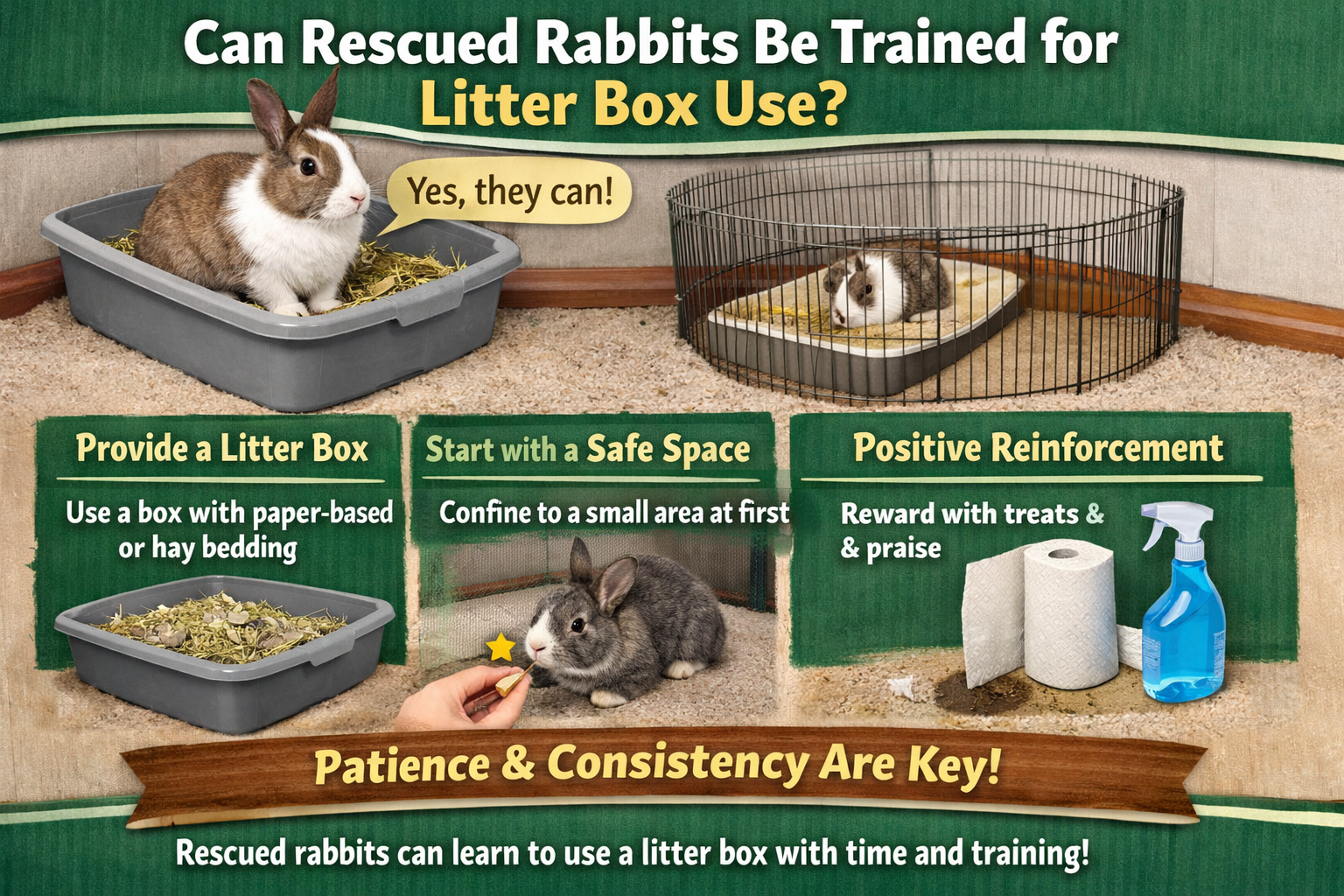
Many people who adopt a rescued Rabbit wonder whether it can be trained to use a litter box like a cat. The good news is that rabbits are naturally clean animals and can often learn litter box habits quite easily. In fact, many rabbits already prefer to urinate and leave droppings in the same area of their living space.
Training a rescued rabbit to use a litter box not only keeps the home cleaner but also helps create a healthier environment for the pet. With patience, consistency, and the right setup, most rabbits can successfully learn to use a litter box.
In this article, we will explore how litter training works for rabbits, why it is beneficial, and the step-by-step process to train a rescued rabbit safely and effectively.
Why Rabbits Can Be Litter Trained
Rabbits have natural habits that make litter training easier compared to many other small animals.
Natural Bathroom Habits
Rabbits often choose a specific corner of their enclosure to use as a bathroom. This instinct makes it easier for owners to place a litter box in that area.
Clean Animals by Nature
Rabbits groom themselves frequently and generally prefer a clean environment.
Territorial Behavior
Rabbits mark their territory with scent glands and droppings. Once a litter box becomes their chosen bathroom area, they usually return to it regularly.
Benefits of Litter Training a Rabbit
Litter training offers several advantages for both the rabbit and the owner.
Cleaner Living Space
Using a litter box keeps the rabbit’s enclosure cleaner and reduces unpleasant odors.
Easier Cleaning
Instead of cleaning the entire enclosure daily, owners only need to change the litter box regularly.
Health Monitoring
Litter boxes make it easier to observe droppings and urine, which can help detect health problems early.
More Freedom
Litter-trained rabbits can safely roam larger areas of the home without causing messes.
Choosing the Right Litter Box
Selecting the correct litter box is an important step in training.
Size and Shape
The litter box should be large enough for the rabbit to sit comfortably inside.
Many owners use:
- Cat litter boxes
- Plastic storage trays
- Corner litter boxes designed for rabbits
Safe Litter Materials
Avoid clay or clumping cat litter because rabbits may ingest it.
Safe options include:
- Paper-based litter
- Aspen shavings
- Compressed wood pellets
These materials are safer and absorb moisture effectively.
Step-by-Step Guide to Litter Training a Rabbit
Training a rescued rabbit takes patience, but the process is usually straightforward.
Step 1: Observe Your Rabbit’s Behavior
Watch where your rabbit naturally chooses to go to the bathroom.
Most rabbits prefer a corner of their enclosure.
Place the litter box in that location.
Step 2: Add Hay Near the Litter Box
Rabbits often eat while using the bathroom.
Placing hay near or inside the litter box encourages them to spend time there.
This naturally reinforces the habit.
Step 3: Move Droppings into the Litter Box
If the rabbit leaves droppings outside the litter box, move them into it.
This helps the rabbit associate the scent with the correct location.
Step 4: Clean Accidents Properly
If urine or droppings appear outside the litter box, clean the area thoroughly.
Removing the scent discourages the rabbit from using the same spot again.
Step 5: Reward Positive Behavior
When your rabbit uses the litter box correctly, offer gentle praise or a small treat.
Positive reinforcement helps strengthen the habit.
Common Challenges During Training
Although rabbits are usually easy to train, some challenges may appear.
Marking Territory
Some rabbits leave droppings around their territory to mark it.
This behavior is normal but usually improves over time.
Young Rabbits
Younger rabbits may take longer to learn litter habits.
Patience is essential during this stage.
Stress or Environmental Changes
Moving to a new home or introducing new pets may temporarily disrupt litter training.
Consistency will help the rabbit regain its habits.
Role of Spaying and Neutering
Spaying or neutering rabbits can significantly improve litter box training.
Unaltered rabbits often mark their territory more frequently.
After sterilization, many rabbits become calmer and more consistent with litter habits.
Consult a veterinarian experienced with rabbits for advice on this procedure.
Tips for Successful Litter Training
Follow these helpful tips to improve success.
Keep Multiple Litter Boxes
If your rabbit has access to multiple rooms, provide litter boxes in several locations.
Maintain a Clean Box
Rabbits may refuse to use a dirty litter box.
Clean it regularly to encourage consistent use.
Be Patient
Training takes time, especially for rescued rabbits that are adjusting to a new environment.
Avoid Punishment
Never punish a rabbit for accidents.
Punishment can create fear and damage trust between the rabbit and owner.
Creating a Comfortable Living Environment
A comfortable environment helps rabbits feel safe and maintain good habits.
Important factors include:
- Quiet surroundings
- Adequate space to move
- Safe hiding areas
- Regular feeding schedules
When rabbits feel secure, they are more likely to follow consistent behaviors such as litter box use.
Conclusion
Rescued rabbits can absolutely be trained to use a litter box. Because rabbits naturally choose specific bathroom areas, litter training is often easier than many people expect.
By choosing the right litter box, observing your rabbit’s habits, and using consistent positive reinforcement, most rabbits quickly learn proper litter box behavior. With patience and care, litter training can make life easier for both the rabbit and the owner while creating a cleaner and healthier home environment.
Rescuing a rabbit and teaching it new habits is not only practical but also helps build trust and strengthen the bond between the pet and its owner.