Introduction
Rescuing an animal can be a life-changing experience for both the pet and the owner. When someone adopts a rescued Rabbit, it is important to remember that the animal may have experienced fear, neglect, or an unfamiliar environment before arriving at its new home.
Because rabbits are prey animals, they are naturally cautious and sensitive to changes around them. New environments, unfamiliar people, loud noises, and other pets can easily cause stress or anxiety in rabbits. Recognizing the signs of stress early is very important because prolonged stress can affect a rabbit’s health and behavior.
In this article, we will explore the common signs that indicate a rescued rabbit is experiencing stress or anxiety and what owners can do to help their pets feel safe and comfortable.
Why Rescued Rabbits Experience Stress
Many rescued rabbits go through major changes before arriving at their new homes. These changes can include:
- Moving from shelters to new environments
- Exposure to loud noises and unfamiliar smells
- Lack of socialization with humans
- Previous neglect or poor living conditions
Because rabbits rely heavily on routine and safety, sudden changes can trigger anxiety.
Common Signs of Stress in Rabbits
Understanding rabbit body language is the key to identifying stress or anxiety. Rabbits communicate mostly through behavior and physical signals.
Below are some of the most common signs that a rabbit may be stressed.
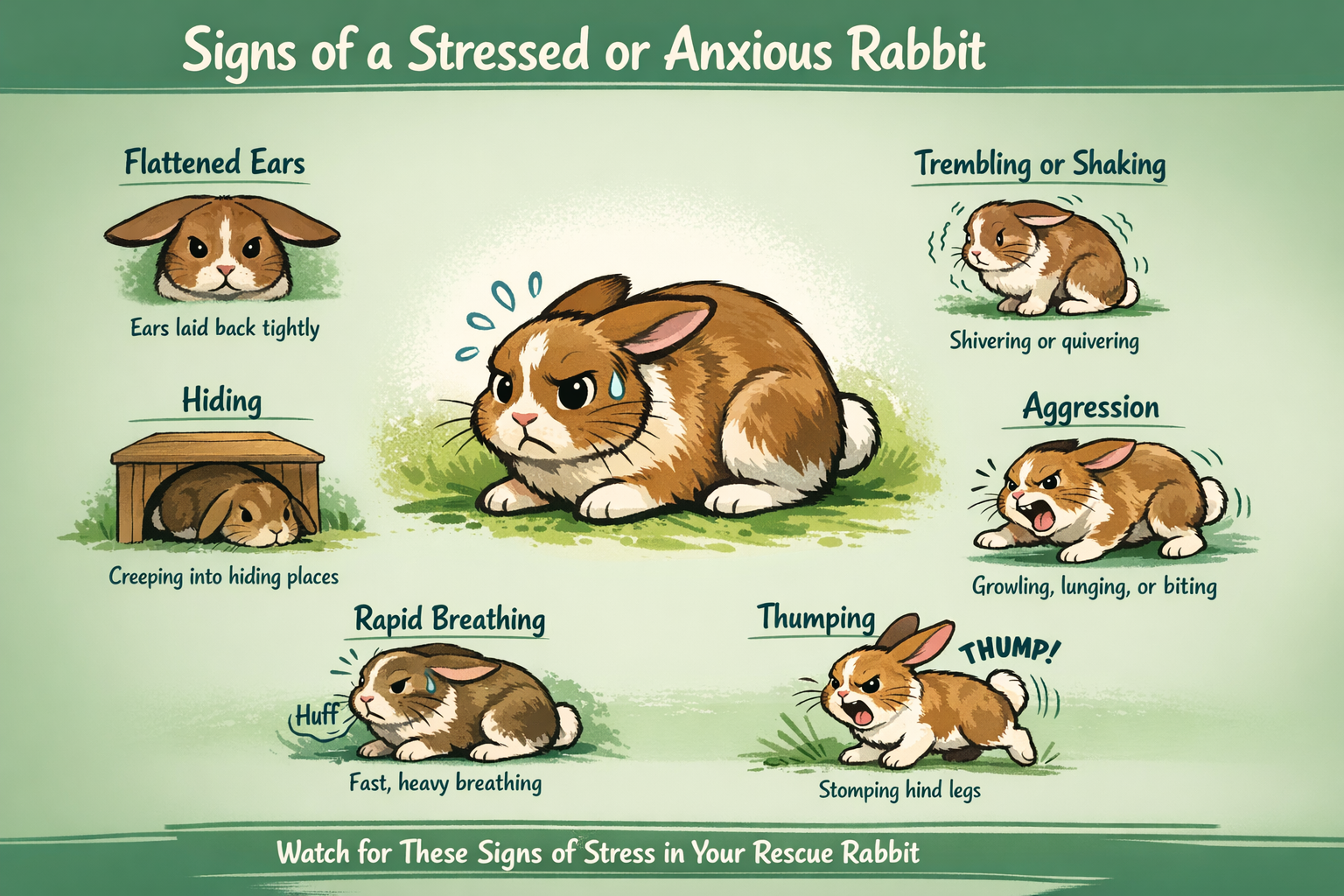
1. Thumping Their Hind Legs
One of the clearest signs of fear or stress in rabbits is thumping.
When a rabbit loudly hits its hind legs on the ground, it is usually signaling danger.
Reasons for thumping include:
- Loud noises
- The presence of a predator
- Feeling threatened or frightened
If your rabbit frequently thumps, it may be feeling unsafe in its environment.
2. Hiding Constantly
Rabbits naturally hide when they feel scared. However, excessive hiding may indicate anxiety.
A stressed rabbit may:
- Stay inside hiding boxes for long periods
- Avoid coming out when people are nearby
- Refuse to explore its environment
Providing safe hiding spaces can help rabbits feel more secure.
3. Rapid Breathing
Another important sign of stress is fast or shallow breathing.
If a rabbit is breathing rapidly without physical activity, it may be frightened or anxious.
This can happen if the rabbit is exposed to loud noises or unfamiliar animals such as a Dog or Cat.
4. Aggressive Behavior
Although rabbits are generally gentle animals, stressed rabbits may show defensive aggression.
This can include:
- Biting
- Lunging
- Growling
- Scratching
These behaviors usually occur when the rabbit feels threatened or cornered.
5. Loss of Appetite
A healthy rabbit normally has a strong appetite and regularly eats hay and vegetables.
If a rabbit suddenly stops eating, it could be a sign of stress or illness.
Loss of appetite should always be taken seriously because rabbits rely on constant digestion to stay healthy.
6. Freezing or Staying Completely Still
Sometimes a rabbit will freeze in place when it feels scared.
This behavior is a survival instinct used to avoid detection by predators.
A rabbit that remains motionless for long periods may be experiencing fear or anxiety.
7. Excessive Grooming
While grooming is normal for rabbits, over-grooming can indicate stress.
A rabbit experiencing anxiety may:
- Groom excessively
- Pull out its fur
- Develop bald spots
This behavior can sometimes be similar to stress-related habits seen in other animals.
8. Loud Tooth Grinding
Rabbits sometimes grind their teeth softly when they feel relaxed.
However, loud tooth grinding can signal discomfort, pain, or anxiety.
If this behavior occurs frequently, it may indicate that the rabbit is experiencing stress.
Environmental Factors That Cause Stress
Several environmental factors can make rescued rabbits feel anxious.
Loud Noises
Rabbits have sensitive hearing. Loud sounds such as:
- Vacuum cleaners
- Loud music
- Shouting
can easily frighten them.
Presence of Other Pets
Rabbits may feel threatened by animals they perceive as predators.
Common pets that may cause anxiety include:
- Dogs
- Cats
- Ferrets
Even friendly animals can cause stress if introductions are not handled carefully.
Lack of Safe Spaces
Rabbits need secure hiding spots where they can retreat when they feel unsafe.
Without a safe place, they may remain in a constant state of stress.
Frequent Handling
Some rescued rabbits are not used to human contact.
Handling them too frequently or too quickly may increase anxiety.
How to Help a Stressed Rabbit
If your rescued rabbit shows signs of stress, there are several steps you can take to help.
Provide a Quiet Environment
Place the rabbit’s enclosure in a calm and quiet area of your home.
Avoid areas with heavy foot traffic or loud noises.
Create Safe Hiding Spaces
Provide boxes, tunnels, or shelters where the rabbit can hide when it feels scared.
This helps rabbits feel more secure.
Introduce New Experiences Slowly
Whether introducing new pets, people, or environments, always proceed gradually.
Slow introductions help rabbits adjust without becoming overwhelmed.
Maintain a Consistent Routine
Rabbits feel safer when their daily routine remains predictable.
Try to feed and interact with your rabbit at the same times each day.
Build Trust Gradually
Sit quietly near your rabbit and allow it to approach you.
Avoid forcing interaction.
With patience, most rescued rabbits eventually learn to trust their owners.
When to Seek Veterinary Help
If signs of stress persist or become severe, it may be necessary to consult a veterinarian experienced with rabbits.
Health issues can sometimes mimic stress symptoms, so professional evaluation is important.
Early intervention can prevent more serious problems.
Conclusion
Rescued rabbits often experience stress or anxiety as they adjust to a new environment. Because rabbits are sensitive animals, it is essential for owners to recognize the signs of stress early.
Common indicators include thumping, hiding, rapid breathing, aggression, loss of appetite, freezing behavior, excessive grooming, and loud tooth grinding. By understanding these signals and providing a calm, safe environment, owners can help their rabbits feel secure and comfortable.
With patience, gentle care, and consistent routines, most rescued rabbits eventually adapt to their new homes and form strong bonds with their owners.