Introduction
Gorillas are one of the closest relatives to humans and are among the most intelligent animals on Earth. Despite their strength and social intelligence, gorillas face many dangers that threaten their survival in the wild. Because of these threats, wildlife organizations and conservationists have created rescue and protection programs to ensure gorilla populations continue to exist.
The species Gorilla lives mainly in the forests of Central Africa and is divided into two main species: Eastern Gorilla and Western Gorilla. Unfortunately, both species are currently listed as endangered or critically endangered.
This article explains the major reasons gorillas face threats and why rescue and conservation efforts are necessary.
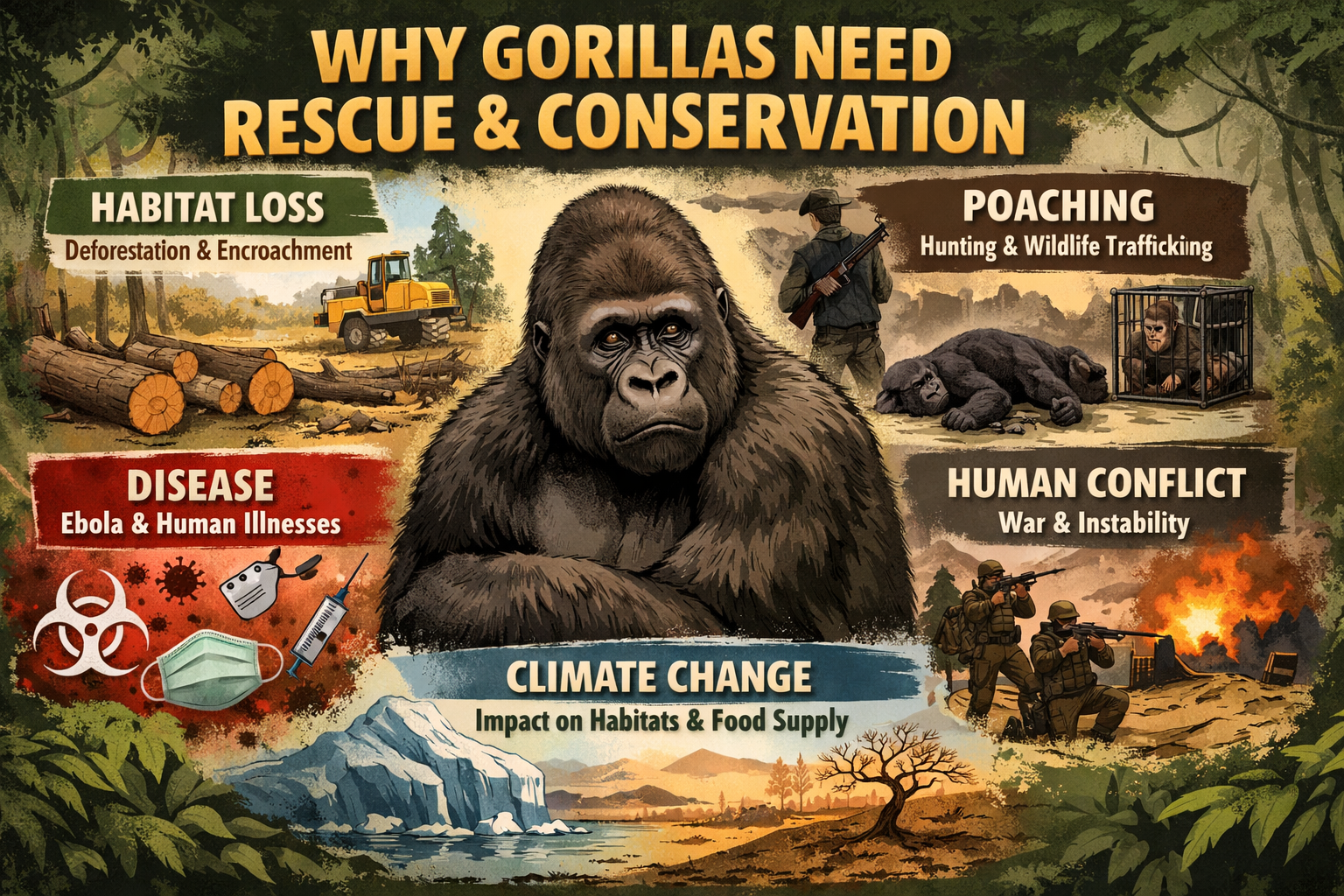
1. Habitat Loss and Deforestation
One of the biggest threats to gorillas is the destruction of their natural habitat.
Causes of Habitat Loss
Forests are often cleared for:
- Farming and agriculture
- Logging and timber production
- Road construction
- Mining operations
When forests disappear, gorillas lose the environment they depend on for food, shelter, and protection.
Many gorillas live in protected areas like Virunga National Park and Bwindi Impenetrable National Park, but illegal logging and human expansion still threaten these habitats.
Without forests, gorilla populations become isolated, making survival more difficult.
2. Illegal Poaching
Poaching is another major reason gorillas require rescue and conservation efforts.
Why Gorillas Are Poached
Gorillas are sometimes hunted for:
- Bushmeat (wild animal meat)
- Illegal wildlife trade
- Traditional medicine
- Capture of baby gorillas
Even when hunters target other animals, gorillas can become victims by getting caught in traps set for smaller wildlife.
Poaching has greatly reduced populations of species such as the Grauer’s Gorilla.
3. Disease Outbreaks
Gorillas are vulnerable to diseases, many of which can be transmitted by humans.
One of the most dangerous diseases affecting gorillas is Ebola.
Impact of Disease
Ebola outbreaks have killed thousands of gorillas in Central Africa. Because gorillas live in social groups, diseases can spread quickly among members.
Other illnesses like respiratory infections can also be transmitted by humans during tourism or research activities.
Organizations like Gorilla Doctors work to monitor gorilla health and treat injured or sick individuals.
4. Human-Wildlife Conflict
As human populations grow, people move closer to gorilla habitats.
This can create conflicts between humans and wildlife.
Common Conflicts
- Gorillas may enter farms searching for food
- Farmers may chase or harm gorillas to protect crops
- Human settlements fragment natural habitats
These interactions can lead to injuries, stress, or even death for gorillas.
Conservation programs often work with local communities to reduce these conflicts.
5. Illegal Mining and Resource Extraction
Mining activities in Central Africa have become a serious threat to gorilla populations.
Minerals used in electronic devices are often extracted from forests where gorillas live.
For example, mining in the Democratic Republic of the Congo has caused significant damage to gorilla habitats.
Mining camps bring:
- Deforestation
- Increased hunting
- Pollution
- Human encroachment
These activities place enormous pressure on wildlife.
6. Climate Change
Climate change is another growing threat to gorilla populations.
Changes in temperature and rainfall can affect:
- Food availability
- Forest ecosystems
- Plant growth patterns
Over time, climate change may alter the habitats where gorillas live, forcing them to move or compete for limited resources.
7. Extremely Small Populations
Some gorilla subspecies have extremely small populations, making them more vulnerable to extinction.
For example, the Cross River Gorilla is considered the rarest gorilla subspecies, with only a few hundred individuals remaining in the wild.
Small populations face risks such as:
- Low genetic diversity
- Difficulty finding mates
- Greater vulnerability to disease and disasters
This makes rescue and conservation programs even more important.
Role of Conservation Organizations
Several organizations work to protect gorillas and their habitats.
These include:
- World Wildlife Fund
- International Gorilla Conservation Programme
- Gorilla Doctors
Their efforts include:
- Anti-poaching patrols
- Habitat protection
- Veterinary care for injured gorillas
- Community education programs
- Monitoring populations using technology
These actions have already helped increase some gorilla populations.
Why Gorilla Conservation Is Important
Gorillas play an important role in maintaining healthy forests.
They help spread seeds through their diet, which supports plant growth and biodiversity.
Protecting gorillas also protects many other species that share the same ecosystems.
Furthermore, gorillas are closely related to humans genetically, making them scientifically important for research and understanding evolution.
How People Can Help
Even people who live far from Africa can support gorilla conservation.
Support Wildlife Organizations
Donating to conservation groups helps fund rescue programs and habitat protection.
Promote Sustainable Products
Avoiding products linked to deforestation helps protect wildlife habitats.
Spread Awareness
Educating others about endangered animals encourages global support for conservation efforts.
Conclusion
Gorillas face many serious threats, including habitat loss, poaching, disease, mining, climate change, and human conflict. These dangers have pushed several gorilla populations close to extinction.
Because of these challenges, rescue operations and conservation programs are essential for protecting these incredible animals. With continued global support, conservationists hope to secure a future where gorillas can thrive in the wild once again.