Introduction
Owls are fascinating birds known for their silent flight, sharp vision, and mysterious presence in nature. Occasionally, people may find an injured or abandoned Owl near their homes and wonder whether they should attempt to rescue it themselves. While helping wildlife is a compassionate act, rescuing an owl requires careful consideration and proper steps to ensure the bird’s safety and well-being.
In most cases, wildlife experts recommend contacting professionals such as licensed rehabilitators. However, in certain situations, temporary assistance at home may be necessary until help arrives. Understanding how to handle the situation correctly is important to avoid causing harm to the owl or yourself.
This article explains whether owl rescues can be conducted at home and the essential steps to follow if you encounter an owl in need.
Understanding the Legal and Ethical Considerations
Before attempting to rescue an owl, it is important to understand that many owl species are protected by wildlife laws in many countries.
In the United States, for example, owls are protected under the Migratory Bird Treaty Act, which makes it illegal to keep or possess wild birds without proper permits.
Because of these regulations, individuals should not attempt to keep an owl as a pet or provide long-term care unless they are licensed wildlife rehabilitators.
The best approach is to contact wildlife professionals who have the training and permits to care for injured birds.
Situations When an Owl Might Need Help
Sometimes people encounter owls that appear to need rescue. Common situations include:
- An owl that is visibly injured
- A bird that cannot fly
- A young owl that appears abandoned
- An owl trapped in a building or fence
However, not every owl found on the ground actually needs help. Young owls often leave the nest before they can fly and are still being cared for by their parents.
Observing the bird from a distance for a short time can help determine whether intervention is necessary.
Steps to Take When You Find an Owl
If you believe the owl genuinely needs help, follow these steps carefully.
Step 1: Observe the Owl from a Safe Distance
Before approaching the owl, watch it for several minutes.
Look for signs such as:
- Obvious injuries
- Inability to stand or fly
- Weak or unresponsive behavior
If the owl appears healthy and alert, it may not need rescue.
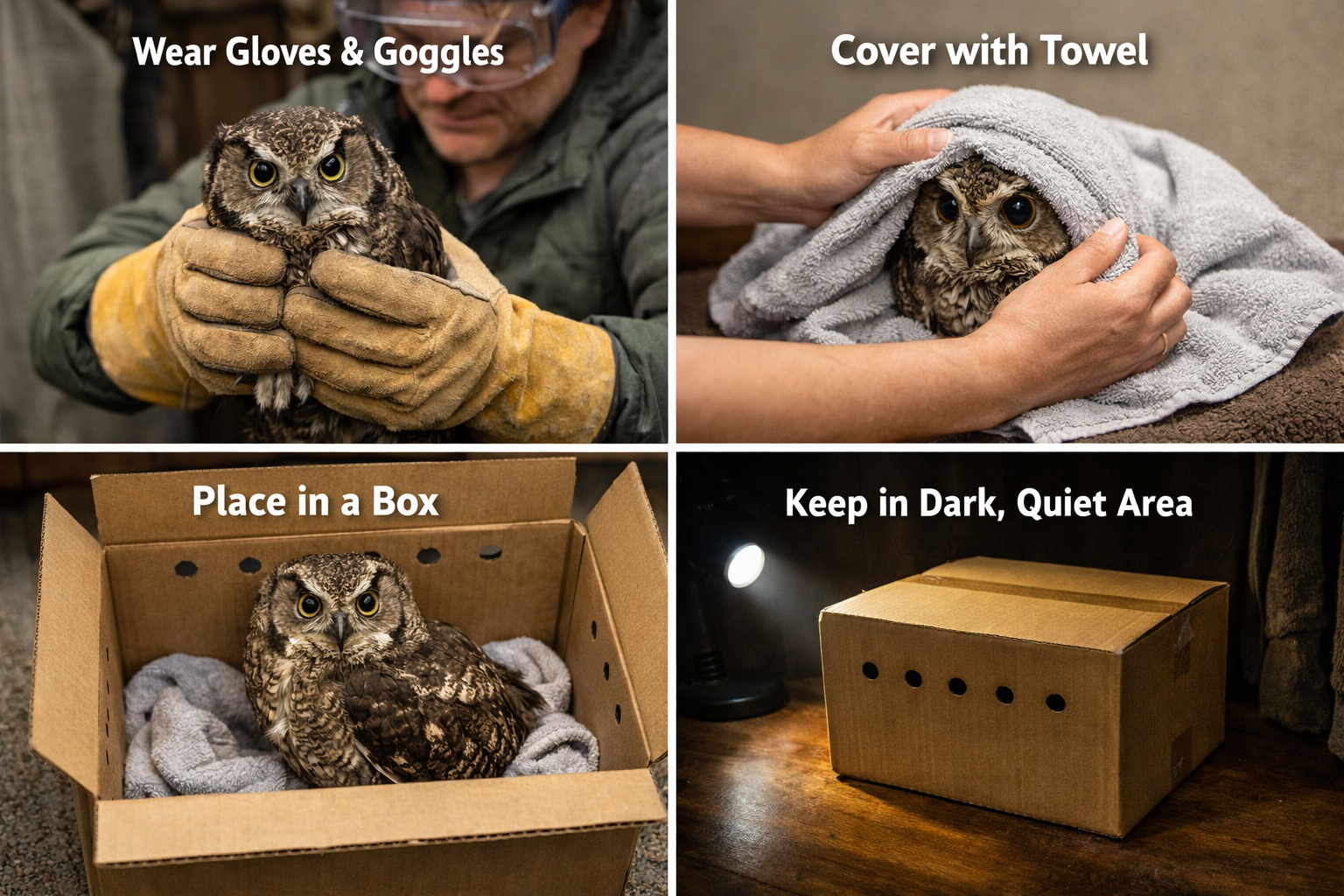
Step 2: Protect Yourself
Owls are birds of prey and have sharp talons and beaks. Even an injured owl may attempt to defend itself.
When approaching an owl, use protective gear such as:
- Thick gloves
- A towel or blanket
Avoid direct contact with the bird’s talons.
Step 3: Carefully Contain the Owl
If the owl must be moved, gently place a towel over it to calm the bird.
Then carefully place the owl inside a ventilated container such as:
- A cardboard box with air holes
- A pet carrier
Keep the container closed to prevent escape.
Step 4: Provide a Quiet and Dark Environment
Stress can worsen injuries in wild birds. Place the container in a quiet, dark, and warm area.
Avoid loud noises, bright lights, or excessive handling.
This helps reduce stress until professional help is available.
Step 5: Do Not Feed or Give Water
Although it may seem helpful, feeding an injured owl can cause serious problems.
Owls require specialized diets and feeding techniques.
Improper feeding may cause choking or digestive issues.
Instead, wait for a trained wildlife rehabilitator to provide proper care.
Step 6: Contact Wildlife Professionals
As soon as possible, contact a licensed wildlife rehabilitator or animal rescue organization.
Organizations such as Wildlife Rehabilitation Centers are trained to handle injured birds of prey safely.
Provide them with details about:
- The location where the owl was found
- Visible injuries
- The owl’s behavior
They will give instructions or arrange to collect the bird.
Why Professional Care Is Important
Wildlife rehabilitators have the knowledge, equipment, and legal permission to care for injured birds.
They can provide:
- Veterinary treatment
- Proper nutrition
- Safe recovery environments
- Rehabilitation for release into the wild
Without proper care, injured owls may not survive or may lose the ability to return to their natural habitat.
What Not to Do During an Owl Rescue
When trying to help an owl, certain actions should be avoided.
Do Not Keep the Owl as a Pet
Owls are wild animals and require specialized care.
Keeping them without permits is illegal in many regions.
Do Not Handle the Owl Excessively
Too much handling increases stress and may worsen injuries.
Do Not Attempt Medical Treatment
Improper treatment can cause additional harm.
Always leave medical care to professionals.
How to Prevent Owl Injuries Around Your Home
Many owl rescues occur because of human-related hazards.
You can help protect local owls by reducing these risks.
Use Bird-Safe Windows
Window collisions are a common cause of injury for birds.
Applying decals or screens can help prevent accidents.
Avoid Using Toxic Rodenticides
Poison used to kill rodents can harm owls that hunt those animals.
Using natural pest control methods helps protect wildlife.
Protect Nesting Areas
If owls nest near your home, avoid disturbing the area.
Maintaining natural habitats supports healthy owl populations.
Conclusion
Although rescuing wildlife is a compassionate act, owl rescues at home should only be temporary and handled carefully. When encountering an injured or distressed owl, the safest approach is to observe the bird, protect yourself, contain the owl gently, and contact a licensed wildlife rehabilitator as soon as possible.
Professional wildlife experts are best equipped to provide medical treatment and rehabilitation so the owl can return to its natural environment. By following proper steps and respecting wildlife laws, individuals can help ensure the safety and well-being of these remarkable birds.