Introduction
Owls are remarkable birds of prey known for their sharp vision, silent flight, and exceptional hunting abilities. Despite their impressive survival skills, many Owl species are frequently injured due to environmental hazards, human activity, and natural challenges. Wildlife rescue centers and rehabilitators often receive injured owls that require immediate medical care and rehabilitation.
Understanding the most common injuries treated during owl rescues helps wildlife professionals and the public respond appropriately when they encounter an injured bird. Early intervention can greatly increase the chances of recovery and successful release back into the wild.
In this article, we will explore the injuries most commonly treated during owl rescues and how wildlife rehabilitation experts manage these cases.
1. Wing Fractures
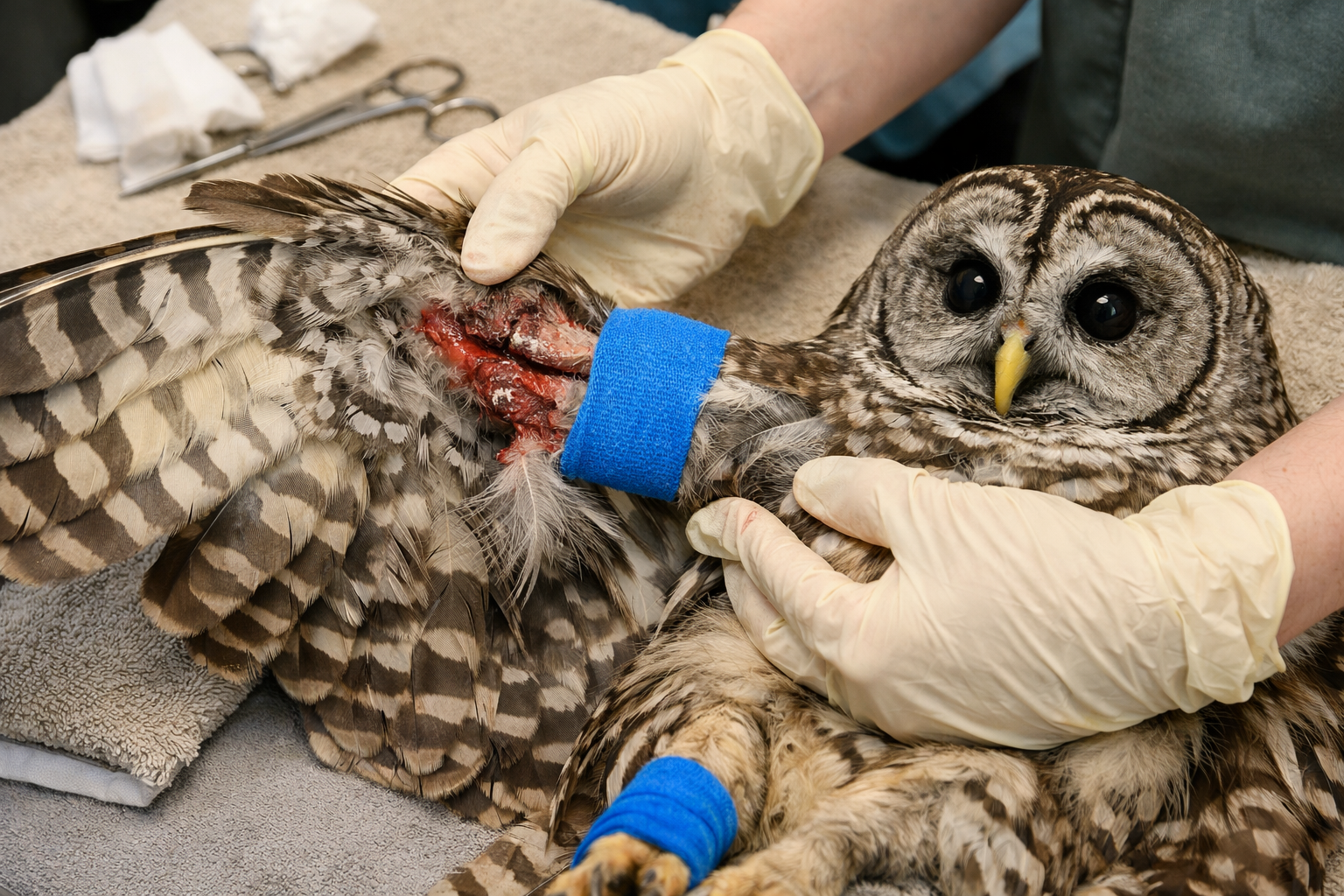
One of the most common injuries seen during owl rescues is a broken or fractured wing. Owls rely heavily on their wings for hunting and survival, so wing injuries can be particularly serious.
Common Causes
Wing fractures often occur due to:
- Collisions with vehicles
- Flying into buildings or windows
- Impact with power lines
- Attacks from other animals
Treatment
Wildlife rehabilitators carefully examine the wing using physical assessment and imaging. Depending on the severity, treatment may include:
- Splinting the wing
- Surgical repair
- Extended rest and rehabilitation
The goal is to restore the owl’s ability to fly before releasing it back into the wild.
2. Head Trauma
Head injuries are another frequent problem among rescued owls.
These injuries usually occur when owls collide with objects such as windows, fences, or vehicles.
Symptoms
Signs of head trauma may include:
- Disorientation
- Inability to fly properly
- Unusual head movements
- Weakness or unconsciousness
Treatment
Treatment typically involves supportive care in a quiet and dark environment while the owl recovers from the concussion or trauma.
Veterinary professionals may also provide medications to reduce swelling or inflammation.
3. Eye Injuries
Owls rely heavily on their eyesight for hunting, making eye injuries particularly concerning.
Causes of Eye Injuries
Eye damage may occur due to:
- Collisions with branches or buildings
- Fights with other animals
- Exposure to sharp objects or debris
Treatment
Wildlife veterinarians may treat eye injuries with:
- Antibiotic eye drops
- Anti-inflammatory medication
- Protective care to prevent infection
In severe cases, permanent vision loss may prevent the owl from returning to the wild.
4. Talon and Foot Injuries
Owls use their powerful talons to catch prey and defend themselves. Injuries to the feet or talons can greatly affect their ability to hunt.
Common Causes
Foot injuries may result from:
- Getting trapped in fencing or netting
- Entanglement in fishing lines
- Animal attacks
Treatment
Treatment often includes cleaning wounds, treating infections, and allowing time for healing.
Rehabilitation specialists also monitor the owl’s ability to grip and perch.
5. Poisoning
Poisoning is an increasingly common issue among owls.
One major cause is secondary poisoning, which occurs when owls eat rodents that have consumed toxic chemicals.
Common Source
Rodent poisons are often used for pest control but can harm predators like owls.
Symptoms
Poisoned owls may show:
- Weakness
- Difficulty flying
- Bleeding disorders
- Loss of coordination
Treatment
Wildlife veterinarians may administer antidotes, fluids, and supportive care to help remove toxins from the owl’s body.
6. Broken Legs
Leg injuries sometimes occur during accidents or predator attacks.
Causes
- Vehicle collisions
- Falling from nests
- Getting trapped in human structures
Treatment
Rehabilitation centers may use splints or surgical procedures to repair broken bones.
Recovery requires a safe environment where the owl can rest without further injury.
7. Dehydration and Starvation
Young or injured owls may suffer from dehydration or malnutrition, especially if they have been unable to hunt.
Causes
- Being separated from parents
- Injury preventing hunting
- Long periods without food
Treatment
Rescue centers provide carefully controlled feeding and hydration to restore the owl’s strength.
The Role of Wildlife Rehabilitation Centers
Injured owls are typically treated by trained professionals at wildlife rehabilitation facilities.
These centers are equipped to handle complex cases and provide specialized care for birds of prey.
Organizations such as Wildlife Rehabilitation Centers work with veterinarians and wildlife experts to rehabilitate injured animals.
Their goal is always to return the owl to its natural habitat once it has recovered.
Rehabilitation and Release
After medical treatment, owls usually go through a rehabilitation period.
During this stage, the bird regains strength and relearns natural behaviors such as flying and hunting.
Rehabilitation may include:
- Flight training in large aviaries
- Strength-building exercises
- Gradual reintroduction to natural prey
Once the owl can survive independently, it may be released back into the wild.
How People Can Help Injured Owls
If someone finds an injured owl, it is important to handle the situation carefully.
Recommended steps include:
- Observing the bird from a distance
- Avoiding direct handling when possible
- Contacting a wildlife rescue organization immediately
Professional assistance ensures the owl receives proper medical treatment.
Conclusion
Owls face many risks in the wild, and injuries such as wing fractures, head trauma, eye damage, talon injuries, poisoning, broken legs, and dehydration are among the most commonly treated during owl rescues.
Wildlife rehabilitation experts play a crucial role in treating these injuries and helping owls recover. Through proper medical care and rehabilitation, many injured owls can eventually return to the wild where they belong.
Public awareness and responsible environmental practices can also help reduce the number of owl injuries, ensuring these magnificent birds continue to thrive in their natural habitats.