Introduction
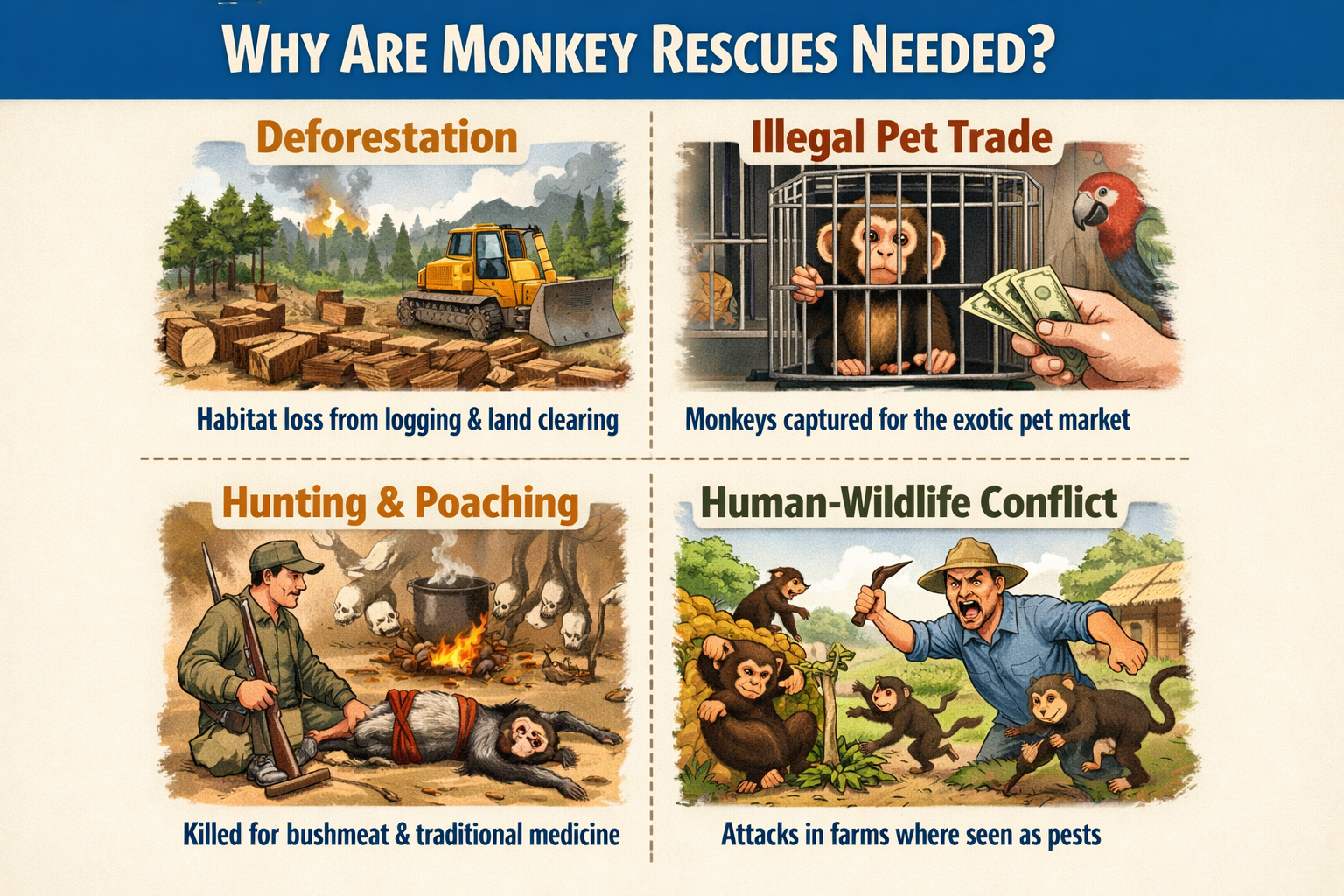
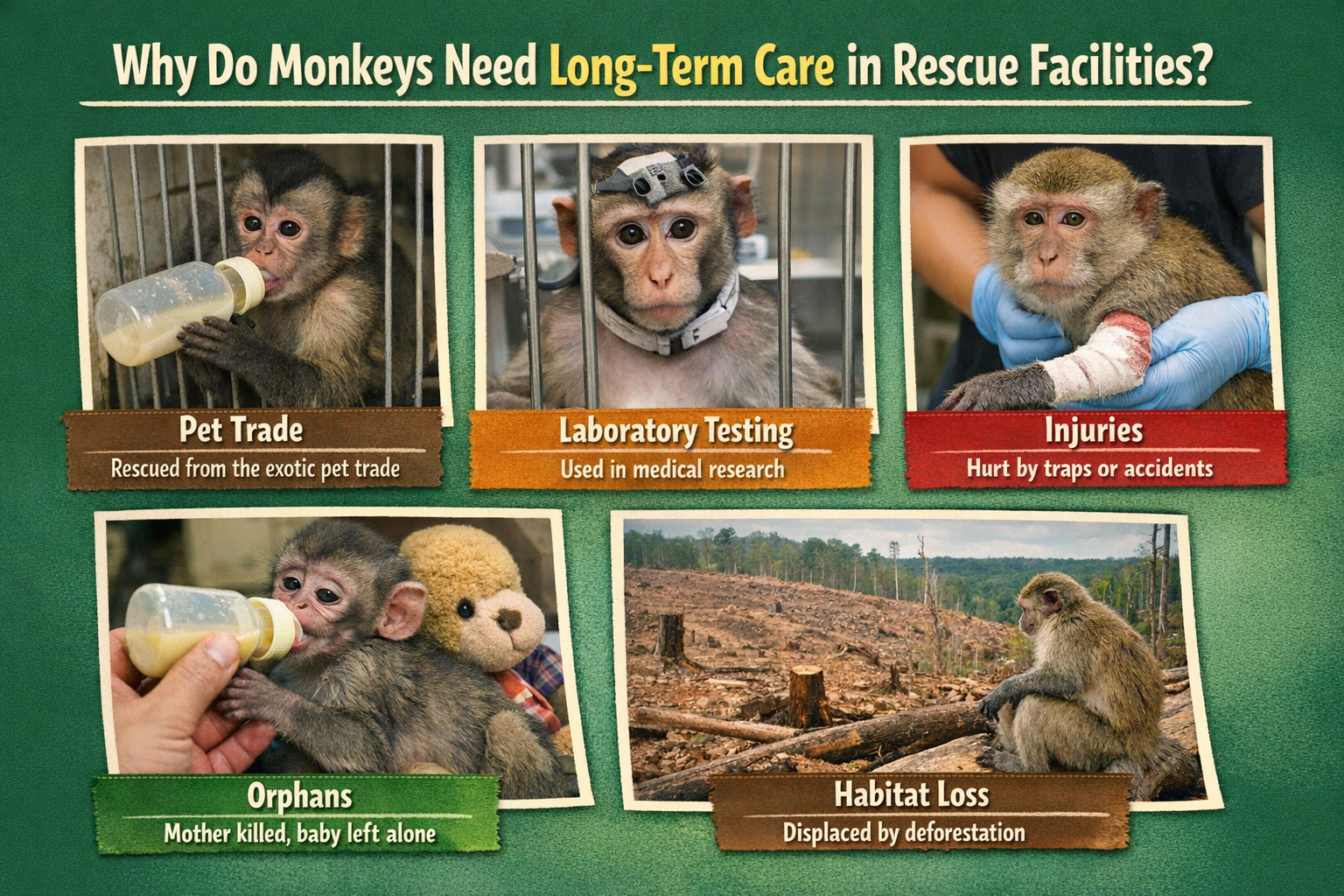
Around the world, many monkeys are rescued from illegal wildlife trade, habitat destruction, poaching, and abusive captivity. Wildlife conservation organizations and primate sanctuaries play a critical role in protecting these animals. They rescue injured or orphaned monkeys, provide medical care, rehabilitate them, and in some cases release them back into the wild.
Members of the primate group Monkey often require specialized care because of their intelligence, social behavior, and environmental needs. For this reason, several organizations have become global leaders in monkey rescue and conservation efforts.
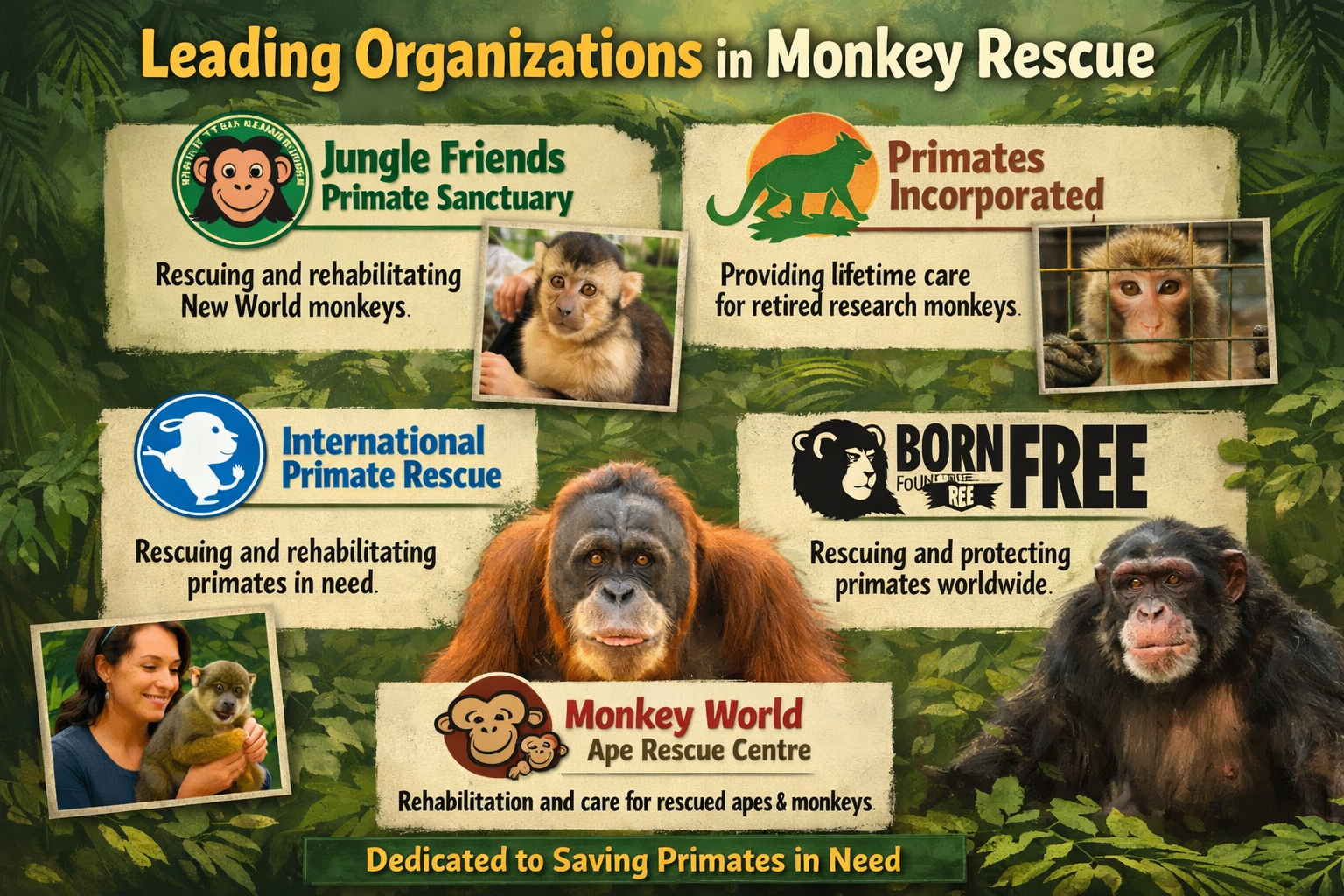
Below are some of the most important organizations working to rescue and protect monkeys worldwide.
1. Pan African Sanctuary Alliance (PASA)
One of the most influential groups in primate rescue is the Pan African Sanctuary Alliance.
Overview
This alliance connects more than 23 wildlife sanctuaries across 13 African countries, making it the largest network dedicated to rescuing and protecting primates in Africa.
Key Activities
PASA and its partner sanctuaries focus on:
- Rescuing monkeys and apes from illegal wildlife trafficking
- Providing lifelong sanctuary for animals that cannot return to the wild
- Working with law enforcement to stop wildlife crime
- Educating local communities about conservation
Together, PASA members care for thousands of rescued primates, including many monkeys and great apes.
2. International Primate Protection League (IPPL)
The International Primate Protection League is another major organization focused on protecting primates worldwide.
Background
Founded in 1973, IPPL works globally to protect monkeys, apes, and other primates from exploitation and abuse.
What They Do
IPPL focuses on:
- Investigating illegal primate trade
- Supporting wildlife sanctuaries
- Advocating for stronger wildlife protection laws
- Creating conservation programs for endangered primates
The organization also operates a sanctuary in the United States and works in more than 30 countries.
3. Vervet Monkey Foundation
This organization is one of the largest monkey-specific rescue centers in the world.
Location
The sanctuary is located in Limpopo Province, South Africa.
Rescue Work
The Vervet Monkey Foundation:
- Rescues orphaned and injured monkeys
- Rehabilitates monkeys rescued from illegal pet trade or laboratories
- Provides lifelong care for animals unable to return to the wild
The sanctuary currently cares for hundreds of rescued primates, including many orphaned vervet monkeys.
4. Oregon Primate Rescue
This U.S.-based sanctuary provides long-term care for rescued primates.
Location
The organization operates a sanctuary in Washington (U.S. state).
Mission
The organization rescues monkeys from:
- Private pet ownership
- Research laboratories
- Government facilities
- Unsafe living conditions
Its goal is to give rescued primates a safe and natural environment while educating the public about the problems of keeping primates as pets.
5. Monkey World Ape Rescue Centre
Another important rescue center is Monkey World, located in Dorset, United Kingdom.
Rescue Efforts
This sanctuary:
- Houses more than 250 rescued primates
- Works with governments worldwide to stop illegal wildlife smuggling
- Rescues animals used in entertainment, laboratories, and illegal pet trade
Many primates at Monkey World were taken from abusive situations and given permanent sanctuary.
6. JACK Primate Sanctuary
The JACK Primate Sanctuary operates in Democratic Republic of the Congo and focuses on rescuing primates from the illegal wildlife trade.
Key Work
The sanctuary:
- Rescues monkeys and apes confiscated from traffickers
- Provides veterinary care and rehabilitation
- Educates local communities about wildlife protection
Many animals rescued here are victims of the bushmeat trade or illegal pet markets.
Why These Organizations Are Important
Monkey rescue organizations play several critical roles in wildlife conservation:
Wildlife Rescue
They save monkeys from trafficking, abuse, and injury.
Rehabilitation
Veterinarians and caregivers help animals recover physically and psychologically.
Conservation
These organizations work to protect wild populations and preserve natural habitats.
Education
Public education campaigns help reduce illegal pet trade and wildlife exploitation.
The Future of Monkey Rescue
The need for monkey rescue organizations continues to grow due to:
- Illegal wildlife trafficking
- Deforestation
- Climate change
- Human–wildlife conflict
Without rescue organizations, many monkeys would not survive after being rescued from dangerous conditions.
Conservation groups are also using modern technology, law enforcement partnerships, and global awareness campaigns to protect primates more effectively.
Conclusion
Several organizations are leading global efforts to rescue and protect monkeys. Groups such as the Pan African Sanctuary Alliance, International Primate Protection League, Vervet Monkey Foundation, Oregon Primate Rescue, Monkey World Ape Rescue Centre, and JACK Primate Sanctuary play a major role in saving primates from exploitation and extinction.
Through rescue operations, rehabilitation programs, and conservation initiatives, these organizations give thousands of monkeys a second chance at life while helping protect primate populations for future generations.