Introduction
Gorillas are among the most intelligent and majestic animals on Earth. However, these great apes face many threats such as habitat loss, illegal hunting, disease, and human conflict. As a result, conservationists and wildlife organizations have been working tirelessly to protect endangered gorilla populations.
Today, modern technology is playing a crucial role in improving rescue, conservation, and monitoring efforts for species like the Gorilla. From satellite tracking to artificial intelligence, innovative tools are helping researchers monitor gorilla habitats, detect threats, and respond quickly to emergencies.
In this article, we will explore how technology is transforming gorilla rescue operations and improving the protection of these incredible animals.
Why Gorilla Rescue and Monitoring Are Important
Gorillas are endangered species that require active conservation efforts. Several gorilla populations have declined significantly due to environmental and human-related threats.
For example, the Mountain Gorilla has faced decades of conservation challenges due to habitat destruction and poaching.
Organizations such as the World Wildlife Fund and the Gorilla Doctors work closely with wildlife authorities to rescue injured gorillas and protect their natural habitats.
Technology has greatly improved how these organizations monitor and respond to threats.
1. GPS Tracking and Satellite Technology
One of the most important technological tools used in gorilla conservation is GPS tracking.
Researchers use GPS-enabled devices to track gorilla movements and study their behavior.
Benefits of GPS Tracking
- Monitors gorilla migration patterns
- Helps identify important habitats
- Detects unusual movement that may signal danger
Satellite data also helps conservationists monitor deforestation in gorilla habitats.
Regions such as Virunga National Park are closely monitored using satellite imagery to detect illegal logging or land encroachment.
2. Camera Traps for Wildlife Monitoring
Camera traps are widely used in wildlife conservation.
These motion-activated cameras are placed throughout forests to capture images and videos of animals.
Advantages of Camera Traps
- Monitor gorilla groups without disturbing them
- Identify individual gorillas
- Detect illegal human activity in protected areas
Camera traps provide valuable data for conservationists studying gorilla behavior and population size.
3. Drones for Habitat Surveillance
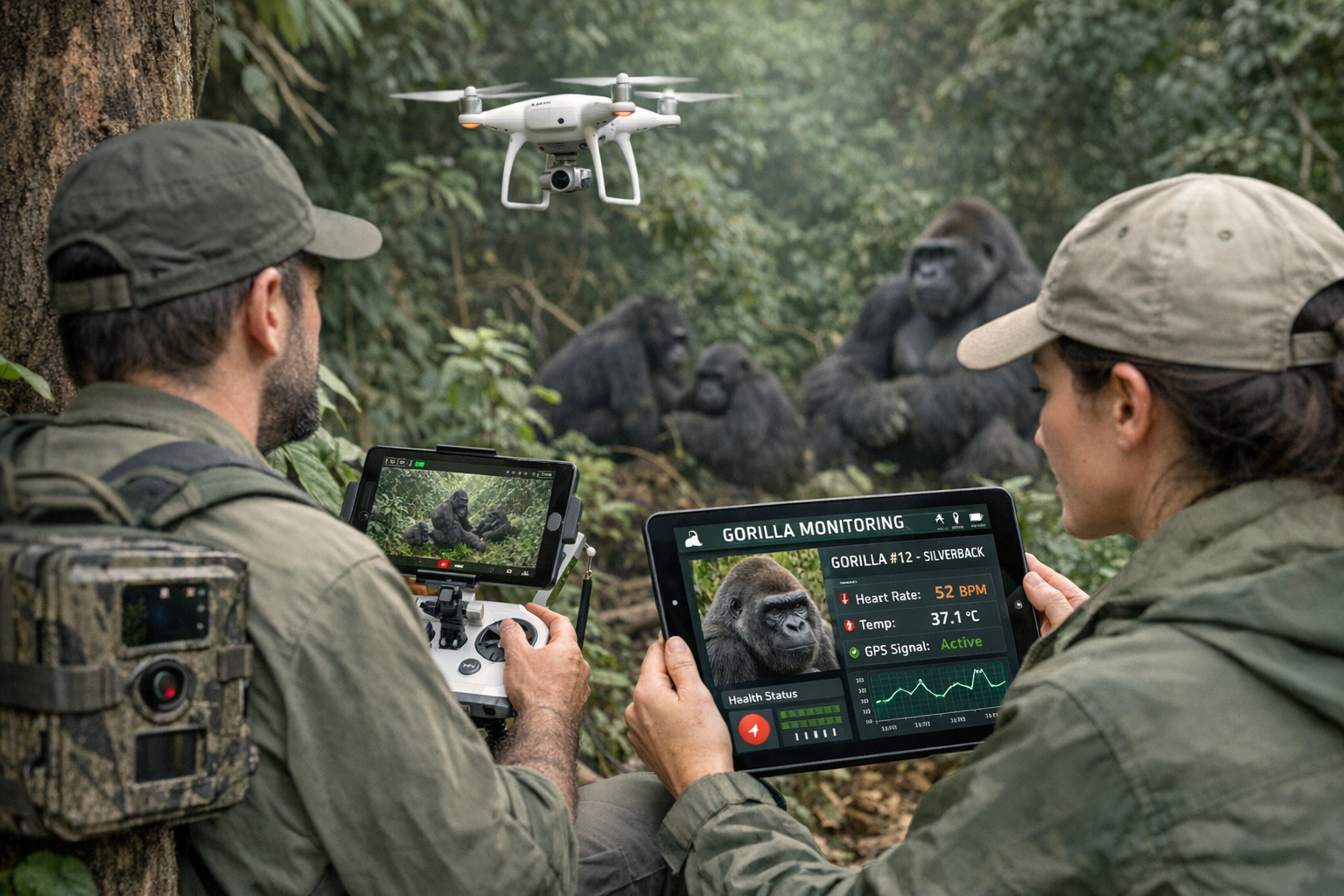
Drones have become powerful tools for monitoring wildlife habitats.
Conservation teams use drones to survey remote forests and track environmental changes.
How Drones Help Gorilla Conservation
- Detect poachers in protected areas
- Monitor forest destruction
- Locate injured or trapped animals
Because drones can cover large areas quickly, they help conservation teams respond faster to threats.
4. Artificial Intelligence for Data Analysis
Artificial intelligence (AI) is increasingly used to analyze large amounts of wildlife data.
AI systems can process images, sounds, and satellite data to identify patterns that humans might miss.
AI Applications in Gorilla Monitoring
- Identifying individual gorillas from photos
- Detecting illegal human activity
- Monitoring wildlife population trends
AI helps researchers make faster and more accurate conservation decisions.
5. Acoustic Monitoring Systems
Gorillas communicate using vocalizations and sounds that travel through dense forests.
Acoustic monitoring technology uses specialized microphones placed in forests to detect these sounds.
Benefits of Acoustic Monitoring
- Tracks gorilla vocal communication
- Identifies the presence of gorilla groups
- Detects human activity such as gunshots
This technology allows conservation teams to monitor wildlife without physically entering sensitive areas.
6. Veterinary Technology for Gorilla Rescue
When gorillas are injured or sick, veterinary teams use advanced medical technology to treat them.
Organizations like Gorilla Doctors provide medical care for wild gorillas.
Technologies Used in Gorilla Medicine
- Portable ultrasound machines
- Digital health monitoring equipment
- Remote communication tools for veterinary teams
These technologies allow veterinarians to diagnose and treat gorillas even in remote forest environments.
7. Mobile Apps for Conservation Teams
Mobile technology has improved communication among conservation workers.
Rangers and researchers use mobile apps to report wildlife sightings and suspicious activities in real time.
Advantages
- Faster reporting of threats
- Better coordination between conservation teams
- Improved data collection in the field
These tools allow teams to respond quickly to emergencies.
Challenges of Using Technology in Gorilla Conservation
Although technology offers many benefits, it also presents some challenges.
High Costs
Advanced equipment such as drones and satellite systems can be expensive.
Limited Infrastructure
Remote forest areas often have limited internet access and electricity.
Training Requirements
Conservation teams must receive proper training to use new technologies effectively.
Despite these challenges, technology continues to improve wildlife conservation efforts.
The Future of Technology in Gorilla Protection
The future of gorilla conservation is likely to involve even more advanced technologies.
Possible developments include:
- AI-powered wildlife tracking systems
- Advanced satellite monitoring
- Improved wildlife health monitoring devices
These innovations could further strengthen efforts to protect gorillas and their habitats.
Conclusion
Technology is becoming an essential tool in improving gorilla rescue and monitoring efforts. Tools such as GPS tracking, camera traps, drones, artificial intelligence, acoustic monitoring, and veterinary technologies are helping conservationists protect gorillas more effectively than ever before.
By combining scientific innovation with dedicated conservation work, organizations around the world are giving endangered species like gorillas a better chance of survival. Continued investment in technology and conservation programs will play a critical role in ensuring that these remarkable animals continue to thrive in the wild.